The past few months have been busy and productive academically and professionally!
The MLA panel I had co-organized and was supposed to co-chair with my colleague and friend Rachel Warner this past January was delayed until MLA’s next annual conference, January 2023, due to concerns related to COVID.
During the spring 2022 semester, I enrolled in the graduate seminar ENGL 695: Research Methods in the Health Humanities, with Dr. Jordynn Jack. After conducting my own ethnographic observation, primary archival research presented via a digital timeline, and an intensive illness narrative, I have now completed all of the credit requirements for the Graduate Certificate in Literature, Medicine, and Culture at UNC-Chapel Hill, which requires various graduate seminar credits and a variety of other engagements with the health humanities via UNC’s programs.
At the end of the spring 2022 semester, UNC’s Department of English and Comparative Literature awarded me the Krista Turner Award for Excellence in Student Support for “outstanding abilities as a mentor and undergraduate instructor.” It was an honor to receive this affirmation of my current teaching strategies, but it was also a humbling experience for me as I continue to learn and grow in my pedagogical techniques. I’m grateful to the department, my students, my colleagues, and my supervisors for their generosity and recognition.
After over four years of service, my Fiction Co-Editor and I selected and trained our successors as Fiction Co-Editors for The Carolina Quarterly, UNC’s literary magazine and one of the oldest continuous literary magazines in the state of North Carolina. Our final issue was the Summer 2022 issue, volume 71.3. We are proud of the work we did during our tenure, and we’re excited to see the new energy our successors will bring to that illustrious journal!
During the spring 2022 semester, I also taught a third section in a row of ENGL 105i: Writing in Health and Medicine, a class that perfectly suits my own passions in combining health and medicine with the humanities and composition/communication. As always, I am impressed and encouraged by the work my students produced and how I saw them grow and improve over the course of our time together. I’m eager to see where they go from here!
This summer, I returned to South Africa to serve as the Teaching Fellow for AFST S350/FILM S340/HLTH S350: Visual Approaches to Global Health (VAGH), a Yale University Summer Session study abroad course that combines traditional global health and epidemiological study with visual storytelling! The last time I worked with the course instructor, Professor Jonathan Smith, for this course was the summer of 2019. We had planned to teach this course in the summers of 2020 and 2021, but COVID obviously prevented us from doing so. To see the 2022 student blog from VAGH, click here.
And finally, during Spring 2022, I completed my written comprehensive exams for my PhD program at UNC in the Department of English and Comparative Literature (Field: American Literature in the Long Twentieth Century; Focus: Health Humanities/Literary Trauma Studies.
I am extremely grateful for everyone who has guided me, supported me, and assisted me, especially my friends and family and the generous and patient members of my PhD committee!
– – –
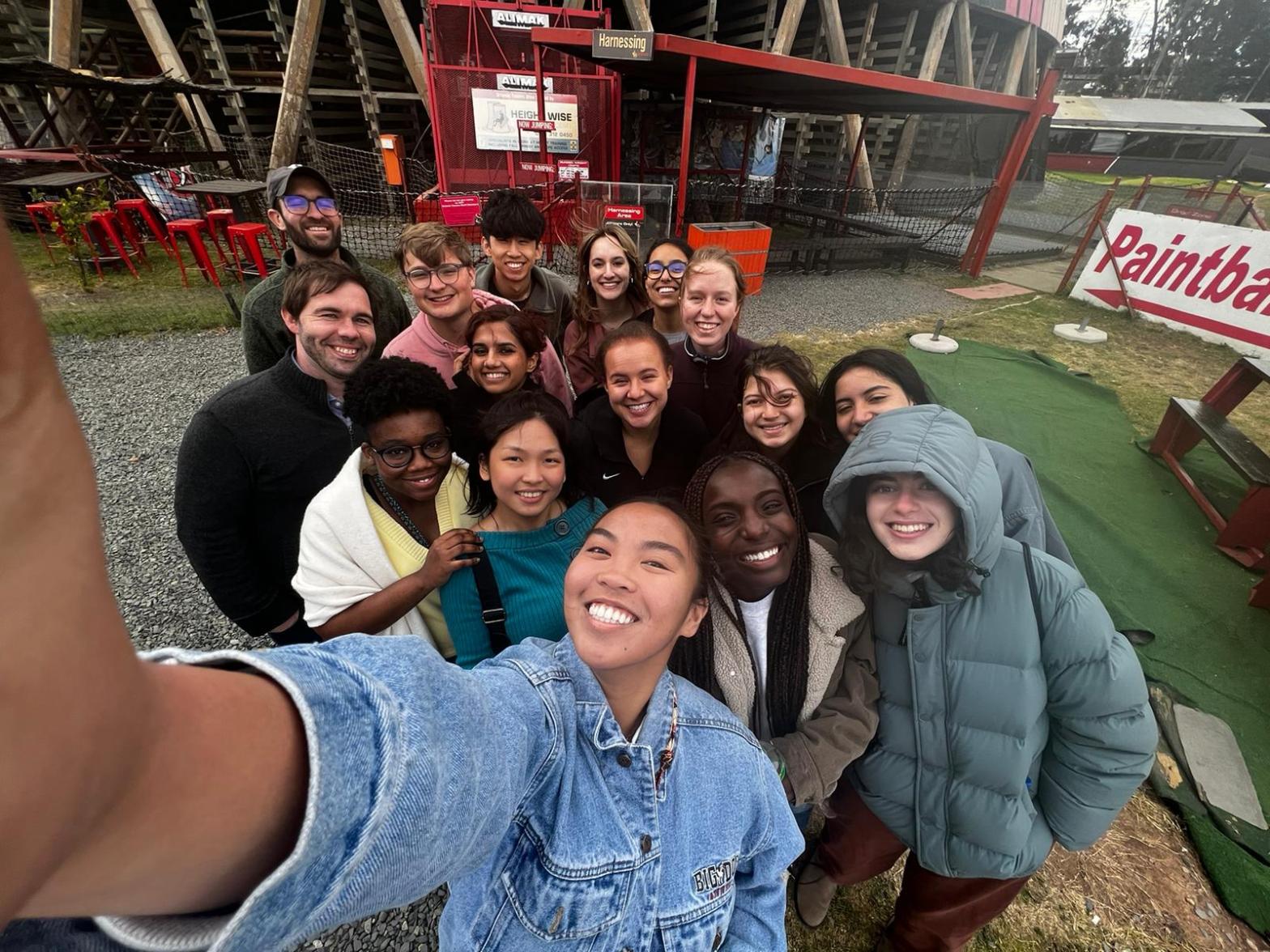
Note: The featured image for this post above is a group “selfie” from the class Visual Approaches to Global Health (VAGH), Summer 2022, taken in Soweto, South Africa (the Southwest Township outside of Johannesburg, South Africa) and featuring all class students, plus course instructor Dr. Jonathan Smith and Teaching Fellow Paul Blom.
The full course number is AFST S350/FILM S340/HLTH S350: Visual Approaches to Global Health, a Yale University Summer Session study abroad course.
Photo credit: Charlene Jamie Miciano. For more info about the course, click here.
 Paul E. Blom